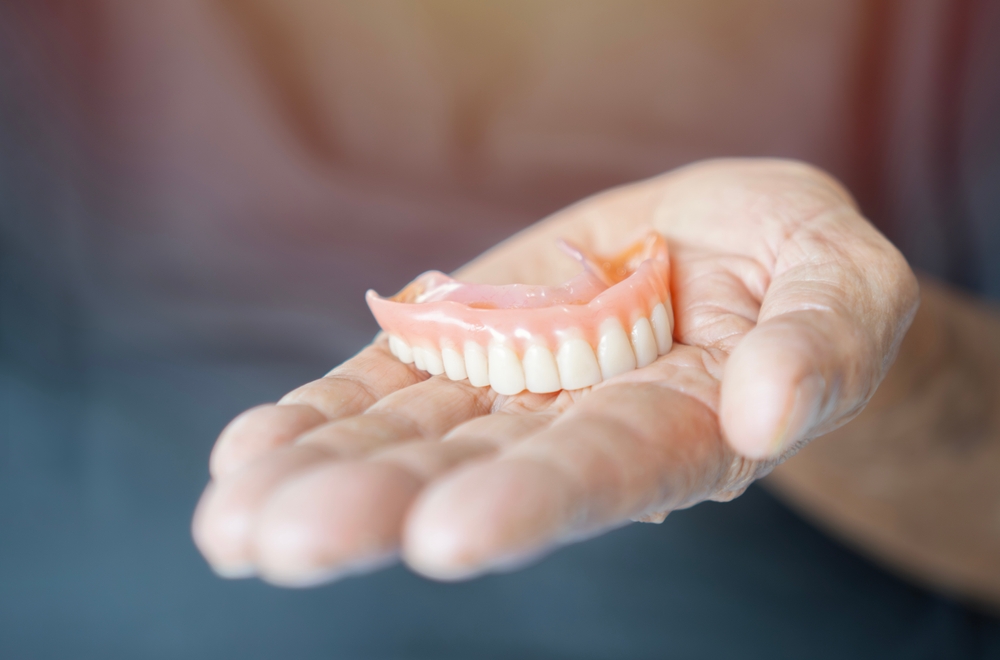
Dentures San Marcos

Discover the New Gold Standard of Tooth Replacement

If you’ve watched your teeth fall out one by one over the years, or if you’ve had a traumatic accident that caused you to lose them all at once, you might feel like your days of smiling with confidence are far in the past. However, that isn’t the case—dentures can help you get a completely new smile incredibly easily!

If you’re near San Marcos, our dentists at North County Aesthetics & Implants can use this prosthetic to replace all of your missing teeth. Make an appointment with us today and we’ll let you know what dentures could do for you!
Request Appointment

Why choose North County Aesthetics & Implants for dentures?

  • Personalized Care from a World-Class Dental Team
  • Prosthetic Design Informed by the Latest Technologies in Oral Medicine
  • Expert Aesthetic Dentists with Outstanding Attention to Detail

Who is a good candidate for dentures?

Nearly anyone missing several or all of their teeth can be an excellent candidate for dentures. The first step towards enjoying your newly restored smile is to schedule a consultation at one of our offices so Dr. Hafeez or Dr. Ayazi can evaluate your mouth and determine the best course of treatment for you. If our dentists find that you are not a good candidate yet, you may be able to become one later after having treatments to resolve issues like gum disease or jawbone erosion.

Effects of Missing Teeth

Tooth decay and gum disease are two of the most widespread health problems on Earth, and they, along with oral injuries, are the most common causes of tooth loss. Missing teeth can lead to a range of oral and overall health issues such as:

  • The remaining teeth drifting out of alignment, making them more vulnerable to damage and infection
  • The gums becoming more exposed to injuries due to food debris
  • Facial sagging due to the teeth no longer supporting the face
  • Trouble eating due to lost chewing power
  • Difficulty speaking due to changes in how air flows within the mouth
  • Atrophy of the jawbone due to a lack of exercise
  • Diminished self-esteem

What qualifies you for dentures?

Dentures may be a great option if you have experienced extensive tooth loss, live with severe dental sensitivity, or have a lot of tooth decay, as long as you have a sufficiently healthy jawbone and gum tissue. Once you receive dentures, you will also need to commit to an excellent oral hygiene regimen to prevent infections and help your appliance fit well for as long as possible.

The right type of denture for you ultimately depends on how many teeth you’re missing. While a partial denture can replace one or a few teeth throughout the mouth, a full denture can restore a whole arch. If you’re looking for an appliance that offers a superior hold and maximum chewing power, implant dentures may be the appropriate solution.

Alternative Tooth-Replacement Options

While dentures can be an amazing way to replace lost teeth, some patients may be better suited by other tooth-replacement methods such as:
Dental bridges: These appliances consist of one or a few artificial teeth fused between two dental crowns, and they can replace a single tooth or several sequential missing teeth. However, placing a bridge requires the alteration of the healthy teeth on either side of the gap so they can support its dental crowns.

Dental implants: These prosthetic appliances are considered the ideal form of tooth replacement because they look and feel like real teeth and can last for thirty years or a lifetime with excellent care. To receive a dental implant, a patient will need to have enough jawbone mass to host the titanium posts that anchors the restoration in place.

Learn More About Dental BridgesLearn More About Dental Implants

Types of Dentures

There are several types of dentures, and the one that you should use comes down to the particulars of your situation. We’ll give you a detailed recommendation when we meet, but here’s what you should know beforehand.

How Dentures are Made

Before you get dentures, you may want to learn how they’re made. It’s a common thought – many folks like knowing what went into their replacement teeth. Fortunately, our office can gladly explain the ins and outs of the denture creation process to you. You then feel more confident in your treatment, rightly trusting that your restored smile is well-crafted. Just keep reading to learn the relevant details, or call our office for a chat!

What are dentures made of?

Whether a denture is partial or full, it always has two crucial parts: a base and artificial teeth. These things make up most of the overall device, so you should keep them in mind. Consider them more fully below:

  • Denture Base – A denture’s base is its foundation, supporting the artificial teeth with a layer of pink-colored material. Acrylic is the most common substance, but others (especially nylon) can be good substitutes.
  • Artificial Teeth – The artificial teeth are tooth-replacing parts of dentures. Since dental labs make them from resin or porcelain, they match your smile’s overall color.

The Denture Creation Process

Each denture is custom-made for its patient, so making one involves a multi-step process. These key steps include:

  • Step 1: One of our cosmetic dentists will design a 3D model (using a dental impression) that matches your final denture’s size and shape.
  • Step 2: After receiving the plaster model, a dental lab will use it to make a wax gumline.
  • Step 3: Workers will set artificial teeth in the wax gumline once it’s ready. From there, they’ll make a prototype denture for the final one.
  • Step 4: Our practice will receive the prototype denture and see if it fits your mouth. Once we’ve confirmed its fit, we’ll send it back to the dental lab.
  • Step 5: The model will be boiled to remove the wax and create a plaster model.
  • Step 6: A separator will go into the model to keep the plaster layer from attaching to the acrylic. Next, this acrylic will be injected into the flask to replace the wax.
  • Step 7: The dental lab will remove all plaster to reveal the final denture. Then, they’ll place the restoration in a bath to remove any plaster residue.
  • Step 8: The lab’s workers will remove your denture’s excess acrylic and polish its surface.
  • Step 9: To ensure it works smoothly and easily, our office will fit your final denture for you.

Adjusting to Your New Dentures

Your mouth may feel sore as you adjust to your dentures. That’s a normal response; you’ll need time to get used to your new teeth and learn how they work. Once you’ve practiced a bit, the dentures will feel more familiar.

All that said, certain tips and tricks can speed up the adjustment. One good method would be to exercise your facial muscles, ensuring they’ll handle dentures better. Other approaches include eating soft foods (to avoid gum irritation) and using special adhesives (to enhance denture security). With these and similar actions, your dentures will soon feel more natural.

Should your denture pain worsen or persist, please call our office. We’ll gladly alter your devices so they don’t make your mouth ache.

Benefits of Dentures

Believe it or not, dentures do far more than replace missing teeth. They can restore confidence, improve daily function, and even protect your health. At North County Aesthetics & Implants, we provide custom-made dentures designed for comfort, durability, and natural aesthetics. From improving speech to enhancing nutrition, these prosthetics can dramatically transform your quality of life. Read more below to see how dentures can help you live, work, and feel your best every day.

Dentures Aftercare

Dentures can restore the beauty and function of your smile after tooth loss and may last for many years if you take excellent care of them. Luckily, caring for dentures is quite simple. Even if you have replaced all your teeth with restorations from our San Marcos office, it’s still important to visit us regularly for routine checkups so we can monitor your oral health, address issues in their early stages, and recommend better hygiene practices if necessary. Here’s a quick overview of a few excellent ways to keep your removable or All-on-X implant dentures in excellent condition.

Remove After Eating

Remove and thoroughly rinse your dentures after each meal to flush away lingering food debris and plaque that can cause destructive oral infections. Never use hot water since it can warp your dentures and ruin their fit.

Clean Your Restoration

You’ll need to remove your dentures for a thorough cleaning at least once a day using a soft-bristled brush. Regular toothpaste can leave scratches in your restoration, so use a small amount of unscented hand soap, mild dish soap, or an approved denture cleanser instead. When not wearing or cleaning your dentures, be sure to store them in a container of lukewarm water or denture-soaking solution to keep them from drying out and losing their shape. Always rinse your dentures before wearing them again to keep the mouth from being exposed to harsh cleaning chemicals.

Keep Your Dentures Safe

When you remove your dentures for cleaning, fill your sink with lukewarm water and cover your countertop with folded towels to create a cushion in case you drop your appliance. It’s also important to store your restorations in a secure place where children and pets cannot reach them.

Remove Dentures When You Sleep

Wearing your dentures continuously for days deprives your gums and jawbones of the rest they need to stay healthy and strong, so you’ll need to go without your restorations for at least eight hours daily. Most people remove their dentures before bed to give their gums a much-needed rest and prevent sores from forming. When not wearing it, make sure to store your appliance in a container with water or an approved soaking solution to keep it from drying out and warping.

Notice Changes

Pay attention to the look and feel of your dentures and bring any changes to our attention. Be on the lookout for oral health issues such as gum irritation and sores, as well as signs of infection such as swelling, bleeding, or a foul taste in the mouth. Also, remain mindful of issues with their fit, such as shifting and clicking. Never attempt to repair a broken denture on your own since this can damage the appliance further or lead to injuries. Instead, contact our office to schedule an appointment so we can determine if your device should be repaired or replaced.

Aftercare for All-on-X Dentures

All-on-X dentures can be a fantastic way to enjoy a strong and stable smile after tooth loss. While you can clean your artificial teeth by brushing twice and flossing once daily, stay away from toothpaste with stain-fighting agents like baking soda or charcoal. Products like floss threaders and water flossers can make cleaning between the teeth easier, and sulcus brushes can help you clean underneath your appliance. It’s also important to rinse with antibacterial mouthwash daily to fight tartar and kill harmful oral bacteria.